



















































































Prediction markets must not override state gambling laws Opinion

American Gaming Association CEO Bill Miller writes that prediction market platforms offer gambling products and should be regulated as such.
. If it looks like a bet, acts like a bet, and carries the same risks as a bet, then it should be regulated as gambling. In Iowa, that means it must answer to state law.
Bill Miller Guest columnist  - Bill Miller is the president and CEO of the American Gaming Association.
For years, Iowa has taken a thoughtful, responsible approach to gambling regulation. From brick-and-mortar casinos to the more recent legalization of sports betting, the state has developed a framework that balances consumer access with public accountability. Iowa’s laws are clear: legal gambling requires licensure, transparency, and a commitment to responsibility.
That framework is now under threat from a new wave of so-called “prediction market” platforms, which are federally registered exchanges under the Commodity Futures Trading Commission (CFTC). But make no mistake: many of these platforms offer gambling products, not financial ones.
Prediction markets are now allowing users to bet on the outcomes of real-world events, including sports contests. That may sound like finance, but in practice, it’s sports betting by another name. If someone wagers on whether the Cubs will win their division, that’s a bet — not an investment. Calling it a “contract” or a “derivative” doesn’t change the core activity.
Just as concerning is who’s being asked to regulate this activity. The CFTC wasn’t created to govern gambling. It was created to safeguard the interests of agricultural producers and manage commodity risk, not authorize new forms of unregulated wagering. As former CFTC Chair Heath Tarbert once said, “America’s farmers and ranchers are at the heart of the real economy and the markets we regulate.” And when the CFTC rejected election betting contracts last year, former Chair Rostin Behnam acknowledged that approving such products would take the CFTC “well outside of its traditional areas of responsibility.” By expanding its oversight into prediction markets, the CFTC is drifting from its agricultural focus — undermining state gambling laws in the process.
More: Online sports betting is a fast lane to gambling addictionNeed a break? Play the USA TODAY Daily Crossword Puzzle.Moreover, these prediction market operators bypass the rules that protect Iowans. Since Iowa legalized sports wagering in 2019, the state has implemented comprehensive consumer protections: minimum age requirements of 21, identity verification, strict responsible gaming standards, extensive background checks for operators, and collaboration with professional leagues to detect suspicious activity. Legal sports betting has generated more than $59.9 million in sports betting tax revenue since launching, with funds supporting essential state initiatives including the Rebuild Iowa Infrastructure Fund, Iowa Skilled Worker & Job Creation Fund, Water Quality Infrastructure Fund, workforce development, and treatment programs for problem gaming.
Prediction market platforms ignore these essential safeguards. They aren’t licensed by the Iowa Racing and Gaming Commission and they aren’t bound by Iowa’s responsible gaming rules or prevention programs. Even more concerning, they aggressively promote their services without the important and required disclosures of licensed operators. Lastly, they don’t contribute a dime to Iowa’s communities in the form of gaming taxes.
These platforms, offering sports event contracts freely under an overly permissive “self-certification” process through the CFTC, threaten both consumers and the integrity of the broader gaming ecosystem. This isn’t responsible innovation, it’s a clear attempt to skirt state gambling laws. Without strong guardrails, consumers are exposed to risks, the integrity of sports is threatened, and public trust erodes.
More: Editorial: Don’t throw the book at Iowa athletes accused of illicit sports bettingThe CFTC plays a critical role in overseeing complex financial instruments, but it is not equipped to regulate gambling products directed at everyday consumers. That’s a job for Iowa’s state regulators, who know their communities, understand the risks, and have demonstrated success in regulating legal gaming operators.
State and tribal sovereignty for gaming regulation is clear, and the U.S. Supreme Court affirmed this in its 2018 Murphy v. NCAA decision. Just last month, 34 state attorneys general, including Iowa Attorney General Brenna Bird, filed an amicus brief in the U.S. Court of Appeals for the 3rd Circuit, supporting New Jersey in its litigation against prediction market platforms and to defend states’ authority to regulate sports betting.
The CFTC should respect these boundaries. Let Iowa — and every state — decide how to manage gambling activity. Innovation is welcome, but it must exist within a legal framework that puts consumers first. The CFTC’s mission is to support farmers, ranchers, and commodity markets, not to oversee gambling products dressed up as financial instruments. If it looks like a bet, acts like a bet, and carries the same risks as a bet, then it should be regulated as gambling. In Iowa, that means it must answer to state law, not circumvent it through a federal agency straying from its agriculture mandate.
Bill Miller is the president and CEO of the American Gaming Association.
Gambling involves risk. Please only gamble with funds that you can comfortably afford to lose. While we do our utmost to offer good advice and information we cannot be held responsible for any loss that may be incurred as a result of gambling. We do our best to make sure all the information that we provide on this site is correct. However, from time to time mistakes will be made and we will not be held liable. Please check any stats or information if you are unsure how accurate they are. No guarantees are made with regards to results or financial gain. All forms of betting carry financial risk and it is up to the individual to make bets with or without the assistance of information provided on this site and we cannot be held responsible for any loss that may be incurred as a result of following the betting tips provided on this site. Past performances do not guarantee success in the future and betting odds fluctuate from one minute to the next. The material contained on this site is intended to inform, entertain and educate the reader and in no way represents an inducement to gamble legally or illegally or any sort of professional advice.
Gannett may earn revenue from sports betting operators for audience referrals to betting services. Sports betting operators have no influence over nor are any such revenues in any way dependent on or linked to the newsrooms or news coverage. Terms apply, see operator site for Terms and Conditions. If you or someone you know has a gambling problem, help is available. Call the National Council on Problem Gambling 24/7 at 1-800-GAMBLER (NJ, OH), 1-800-522-4700 (CO), 1-800-BETS-OFF (IA), 1-800-9-WITH-IT (IN). Must be 21 or older to gamble. Sports betting and gambling are not legal in all locations. Be sure to comply with laws applicable where you reside. It is your sole responsibility to act in accordance with your local laws.
FAQ
$100 Bet Turns Into $1.7M Jackpot: Epic Parlay Win Revealed
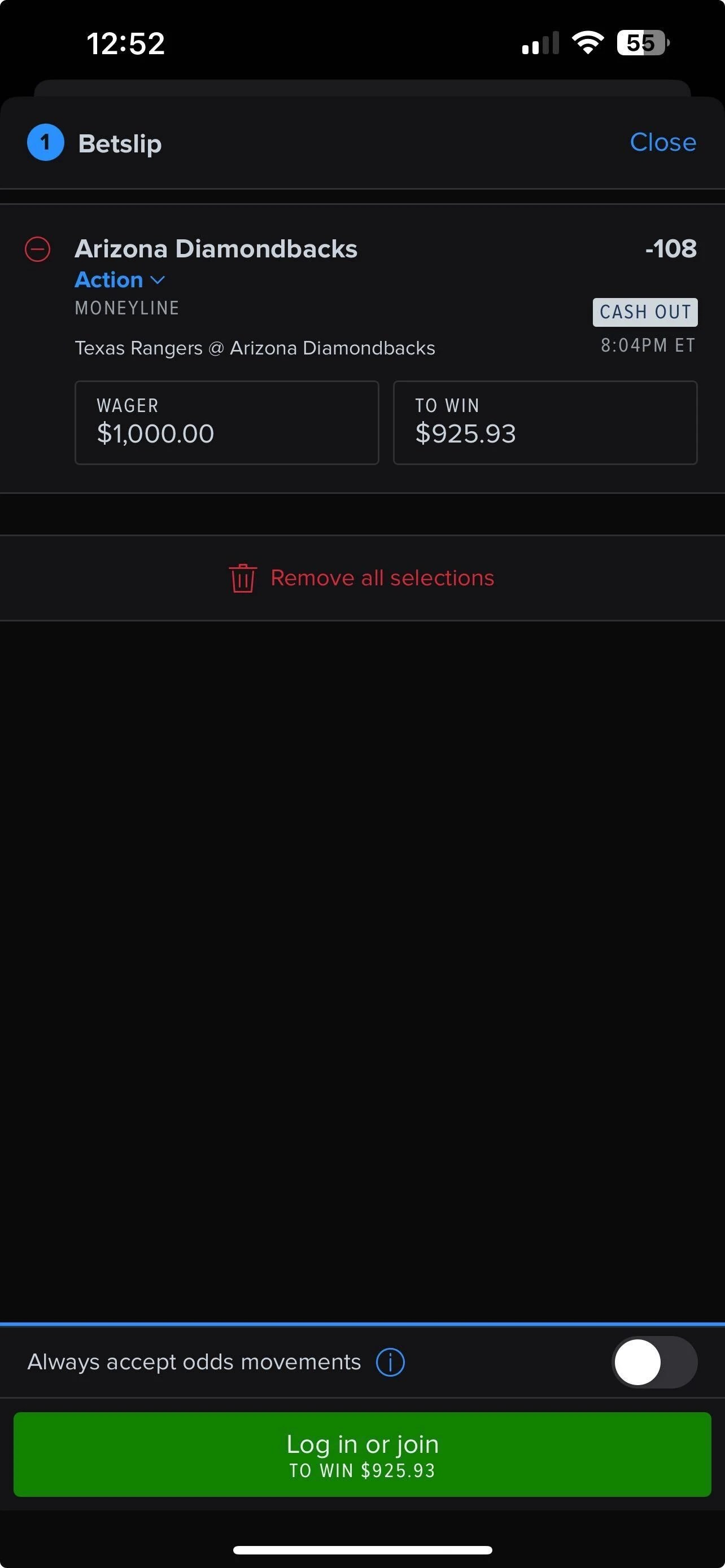
Imagine turning $100 into a potential $1.7 million windfall—that’s the wild story of gambler @Ascended85. In 2023, this anonymous bettor placed a three-leg parlay on DraftKings, betting on massive underdogs: the Texas Rangers to win the MLB World Series at 22-1 odds, the Kansas City Chiefs for the NFL Super Bowl at 6-1, and the Oklahoma City Thunder for the NBA Finals at 70-1. A 50% DraftKings promo boosted the total payout to a jaw-dropping 17,145-to-1.
How did the introduction of online casinos impact the game of roulette?
How did the introduction of online casinos impact the game of roulette? The introduction of online casinos has had a significant impact on the game of roulette. Online casinos made roulette and other casino games easily accessible to anyone with an internet connection. Players can now enjoy their favorite casino games from the comfort of their own homes, without having to travel to a land-based casino. Online casinos also introduced new variations of roulette, such as multi-wheel roulette and mini-roulette, which are not typically found in traditional casinos.
When and why was the double zero added to the American roulette wheel?
When and why was the double zero added to the American roulette wheel? The double zero was added to the American roulette wheel in the mid-19th century. The exact year is not clear, but it is believed to have been added around the 1860s. The reason for its addition was to increase the house edge, making the game more profitable for the casino. At the time, gambling was not regulated in the United States, and casinos were free to set their own rules and payouts.
What is the dime line in sports betting?
For those who are not caught up with the betting lingo, a dime line is a betting line with a 10-cent straddle, particularly used in baseball. For example, with a dime line, if the favorite is minus -120, the underdog is plus +110. Here is an example of a baseball dime line you might see in a sportsbook.
When and where was the game of roulette first played?
When and where was the game of roulette first played? The game as we know it today first appeared in Paris in 1796, and quickly gained popularity throughout Europe, especially in the casinos of Monte Carlo. The addition of the zero by Francois and Louis Blanc in the mid-19th century helped to increase the house edge and make the game more profitable for casinos.
Maximize every wager with Sports Betting Dime. See expert online sports betting picks, news, odds, and sportsbook promos from the SBD team
This site only collects related articles. Viewing the original, please copy and open the following link:Prediction markets must not override state gambling laws Opinion